
For most of the last decade, fintechs had a built-in shortcut: find a sponsor bank, rent its charter, and skip the slow, expensive parts of being a regulated institution. That window is closing.
For years the charter was treated as plumbing. A fintech could plug into a sponsor bank, launch quickly, and let the bank absorb the regulatory complexity in the background. That held up until it didn’t. When Synapse failed in 2024, customer funds were frozen and it became clear how little visibility some sponsor banks had into their partners’ books. The consent orders that followed put bank oversight of fintech programs under a much harder light.
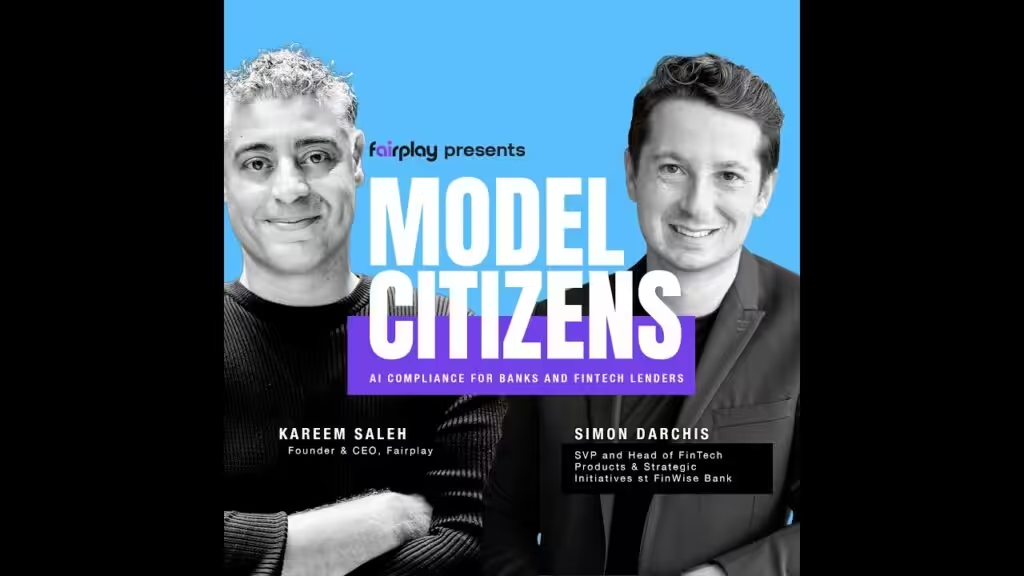
The lesson regulators took from that period is the one Simon makes in our conversation: a sponsor bank can’t treat its partner’s product as someone else’s problem. If a fintech runs on your charter, its product is, for all practical purposes, an extension of your bank, and its risk is your risk.
TL;DR
- The arms-length “rent-a-charter” model is ending. Banks increasingly treat partner fintechs as extensions of the bank.
- That means the bank owns the risk of the fintech’s models, marketing, pricing, and decisions, not just its own balance sheet.
- Fair lending and model governance stop being a fintech afterthought and become a shared, structural requirement.
Watch the conversation with Simon.
What “extension of the bank” actually means
If you are building or partnering in this model, three implications matter most.
1) The bank owns the model risk. Every credit, pricing, marketing, and fraud model the fintech runs is, functionally, the bank’s model. If it produces a biased or unexplainable outcome, the bank answers for it.
2) Compliance moves upstream. It is no longer a check at the finish line. Fairness, explainability, and documentation have to be designed into the product from the start, the same way a well-run bank would build them.
3) Fair lending becomes a shared requirement. Both sides need the same evidence: who the model approves and declines, how it prices, and whether outcomes hold up across protected groups. “We trust the vendor” is not a control.
What this means for how you build (or partner)
If you’re a fintech: start operating the way a regulated lender would, before a partner bank requires it. Document how your models reach decisions, test them for fair-lending outcomes across protected groups, and be ready to hand a sponsor bank evidence instead of assurances. Fintechs that do this don’t slow down. They clear partner reviews faster and keep shipping.
If you’re a sponsor bank: your job is to let good partners move fast without taking on blind risk. Set model-governance and fair-lending expectations up front, and ask for monitoring that runs continuously instead of a single check at launch. Done well, oversight is what lets you say yes to more partners, not fewer.
The bottom line
The next chapter of fintech will not reward the loosest charter arrangement. It will reward the partnerships that can prove their models are fair, governed, and defensible, to each other and to regulators.
Fintechs that treat that as a foundation, not a formality, will be the ones still standing.
Partnering across a bank and fintech relationship? See how FairPlay helps both sides test for fairness, validate models, and turn compliance into a competitive advantage.