On July 31, the OCC and FDIC proposed a significant rewrite of the CRA.
To understand the effect on OCC/FDIC sponsor banks, start with the paradox: A sponsor bank’s community may be national. Its CRA examination is still largely local.
Through fintech partnerships, sponsor banks often serve low- and moderate-income consumers, people building credit, small-dollar borrowers, and businesses overlooked by traditional channels. Nationwide.
But CRA exams remain anchored to the communities surrounding a bank’s physical facilities. For many sponsor banks, that may represent only a handful of branches.
Changes for Sponsor Banks
While the OCC/FDIC proposal would not eliminate this mismatch, 3 changes could help sponsor banks manage it:
1. Category relief: Most sponsor banks have less than $10B in assets. The new proposal would move these banks from 3 CRA tests (lending, investment, and service) to two: lending and community development. These banks would also leave the CRA reporting regime. That is reporting relief, but not data relief. A sponsor bank must still understand every partner’s lending: what was originated, where borrowers are located, and whom the programs serve.
2. A geographic gateway: A bank that demonstrates sufficient community-development activity in its assessment areas could receive broader consideration for activity outside those areas. For sponsor banks, that could mean more recognition for activity where customers live and fintech programs operate. But the gateway is local-first. Banks must determine how much local activity they need, whether enough opportunities exist, and how capital and deposits would be allocated across their assessment areas.
3. A rebuilt strategic-plan option: This may be the biggest opportunity for sponsor banks. A strategic plan allows a bank to propose CRA goals tailored to its actual business model and seek agency approval before being evaluated against them. A well-designed strategic plan can connect partner-lending, local obligations, broader community-development activity and service to low- and moderate-income communities.
The proposal would also provide agency feedback on draft plans before formal submission. And the agencies ask whether strategic plans should permit community-development goals outside a bank’s assessment areas. That’s consequential.
How Sponsor Banks Should Plan for CRA Rule Changes
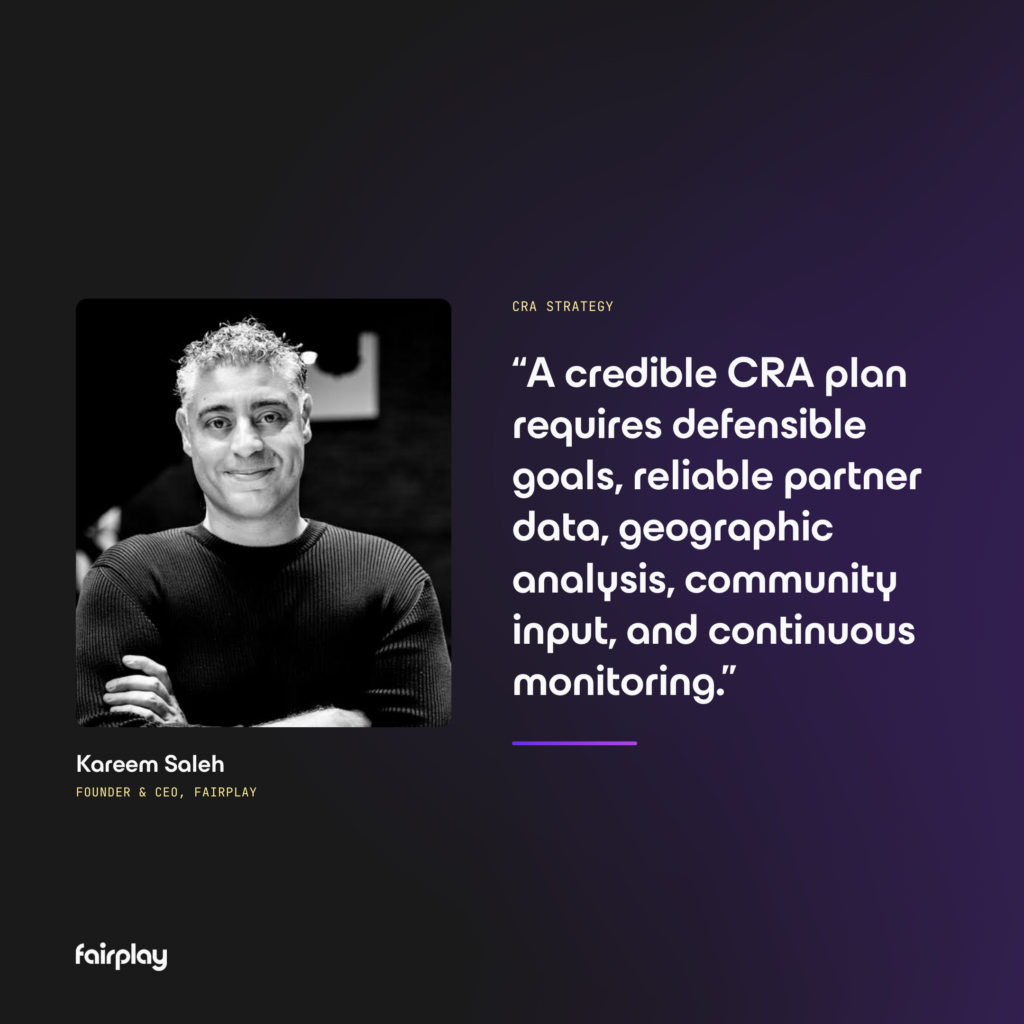
A credible CRA plan requires defensible goals, reliable partner data, geographic analysis, community input, and continuous monitoring.
That’s what FairPlay’s CRAi simplifies: compare standard CRA tests with a strategic plan, set and test goals, identify geographic gaps, and monitor performance before a problem emerges.
Sponsor banks have built national community franchises inside a local CRA framework.
This proposal may narrow that gap but only for banks that can translate their work into measurable goals, credible evidence, and a plan examiners can approve.
FairPlay can help. Contact us to see how.